● New Release/Electronic/Europe
Mr Yellow Moose
"Little songs in my native language, alongside dance music that bridges a wide spectrum of genres and cultures."
Jun 19, 20264 min read
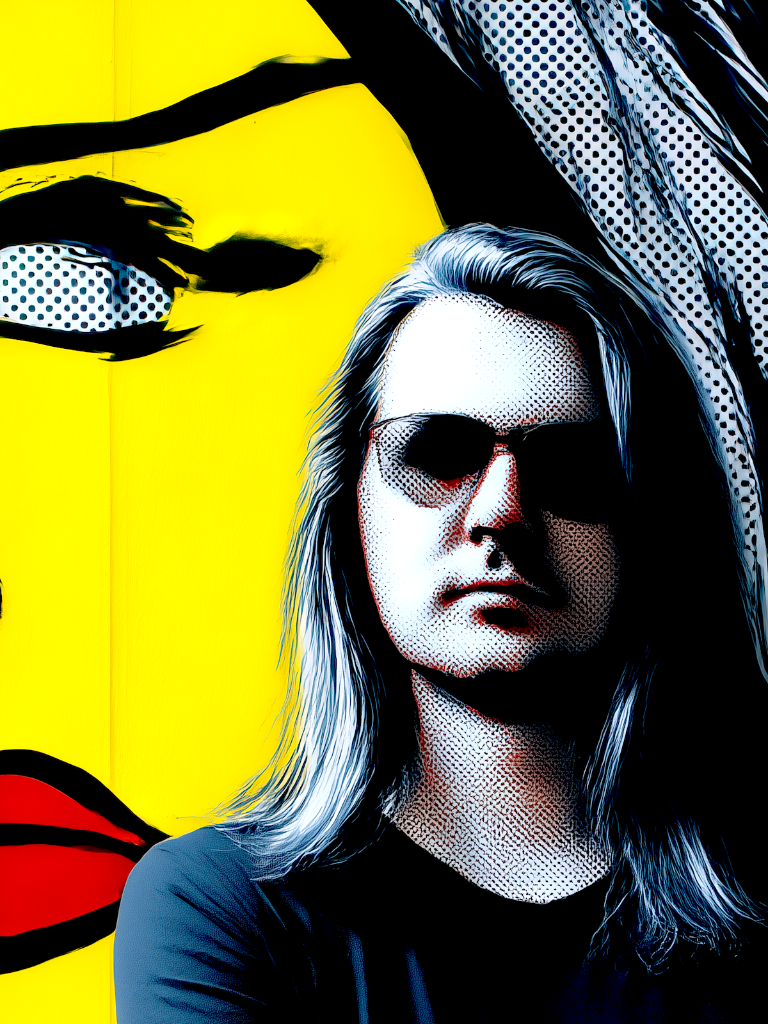
Mr Yellow Moose · Europe

Type at least 2 characters to search
"Little songs in my native language, alongside dance music that bridges a wide spectrum of genres and cultures."
Mr Yellow Moose · Europe
● On the Industry"If you're content with yourself, you're probably already quite successful."
I am an electronic music producer whose work focuses on two things. First, my 'little songs', pieces that address personal and socio-political themes in my native language, mostly produced in small jazz or rock arrangements. My second passion is dance music, drawing on a wide range of influences from different genres and cultures.
Music has always been an important part of my life. In the beginning, it was my grandmother who played a big role in that, buying me records from time to time, and I would then spend hours in the music room. The first record I spent all my pocket money on was Scary Monsters by David Bowie, and by then, the eighties had already arrived. I cannot really remember much of the eighties, which is probably a good sign. But whatever lies dormant from that wild decade in my subconscious is probably what keeps showing through in my musical roots.
Xanadu is a translation of a famous poem from English Romanticism. I tried to turn that poem into a musical painting. And yes, there are a few lines in it that I consider especially meaningful for artists, lines that move me deeply myself, which were spoken at the end of the song by my friend Jimmy Dunn. It is that melancholy, that longing, that painful ache of longing, which some artists, myself included, need for their work. It is that moment you would most like to hold on to forever, and yet have to let go.
I would not want to prescribe how the listener should hear it. But I would be delighted if the song came as a surprise and drew them in, so that those monstrous seven minutes might shift the space-time continuum ever so slightly and awaken visions of their own. That would be entirely in keeping with the spirit of the poem. And if they then turned to the poem itself and found this musical painting to be a worthy translation, that would be my greatest happiness.
The place seemed to breathe peace, freedom, love, and dance.
This question is not easy to answer, because, as I said at the beginning, I work across completely different genres. But at my core, in terms of content, I would describe myself as being mostly at home in post-punk.
Topics I know nothing about, and there are quite a lot of them.
The trumpet keeps recurring, but my absolute favorite instrument is the bass.
As I said, I can only write about what I know in one way or another. At the very least, it has to exist somewhere within me. Giving birth to something out of nothing seems rather difficult to me.
So far, I have always worked alone. On Xanadu, with Jimmy Dunne, it was the first time I experienced an easy-going collaboration. I definitely want to pursue that further, especially since I am always desperately searching for good singers and rappers myself.
I think a song is like an academic paper: you could work on it forever. But there comes a moment when you have to send the child out into the world.
Sometimes it's enough to take a break. And sometimes it's simply chance that helps you move forward.
Never.
In fact, I listen and observe closely. I usually look for the small stories in everyday life, because beauty and humor often lie in those little things that are so easily overlooked.
How much time do we have for the interview?
No.
Haha. My younger self would already have been quite old by then. But I come more from the theatre, so lyrics matter a great deal to me, and I tend to think in scenes when I write. From that perspective, nothing has changed in terms of content.
Definitely a lot.
I am very critical in my lyrics, and that is often misunderstood. But if one takes criticism to mean that you can only truly criticize what you also love, then that is exactly the point.
My real life is quite modest and small, and I simply make some music because I enjoy it. As for Mr Yellow Moose, he is no different from who I am. Authenticity matters to me. I would not want my musical activities to result in a diagnosis.
For a long time, the low end was the problem for me. I was actually happy with the compositions, but enough of a perfectionist not to release them yet. That was how I came across the online school, where I more or less got the low end under control within two days, but that also opened up a whole trail of further questions. That turned out to be a very good thing for me, because it led me to a community of like-minded people, and I have been steadily improving my know-how ever since. When it comes to production, mixing, and mastering, I think I am focused and structured.
Time, money, and sleepless nights. Also some time in nature and some time with my family. But now that I have been through the release process, I have gained a great deal as well. Once you have done it once and checked off all the registrations and the relevant institutions, it comes down to just a few clicks in the future.
I've always handled that myself so far, so that responsibility falls on me. What is important to me, however, is that the people I work with receive at least proper recognition for their work. Credit where credit is due! The music industry is undoubtedly a tough one, where a lot of unfairness can happen. Even as a bedroom producer, you quickly become aware of how many people are looking to take a cut along the way. Making music costs money. This affects me less personally because I have no plans to enter the industry professionally. I'd like to remain a hobbyist, albeit a professional hobbyist: someone people can trust and who can lend a hand with production, mixing, and mastering for the price of a coffee, so to speak.
Yes.
Music isn't going anywhere. It's alive everywhere you look. I try to keep things very simple for myself. In my private life, I've always successfully stayed away from social media. Now that I'm approaching the release date, however, I've learned quite a bit, including that, for the direction I'd like to take in the future, it might actually make sense to pay closer attention to it. At the moment, though, I've only set up a landing page and a Ko-fi account. I distribute my music through SoundCloud.
Even now, I tend to look at the labels where artists I'm interested in release their music. That's a habit I've carried over from my days as an unknown DJ. There are a few niche labels that specialize in delightfully eccentric stuff, places where the artists genuinely are up for some creative nonsense. What I wouldn't be willing to sign up for, though, is the pressure to constantly perform in service of someone else's capital or commercial interests. That genuinely doesn't interest me.
I'm beyond that.
Don't hurry.
The music market is an enormous economic force. Musicians pour their last dollar into their craft. Buy a guitar, and you've already spent a significant portion of your household income. If you want high-quality audio for collaboration, you have to pay for bandwidth and services, and the list goes on. The expenses never really end. To be honest, if the market were truly fair, the roughly $30 billion generated by recorded music alone would be distributed very differently. Very few musicians are actually able to make a living from their music. Given that reality, it's hardly surprising that gatekeeping is the norm.
I wouldn't exploit an unrelated topic or activity simply as a vehicle to drive attention to my music. In other words, I wouldn't create content that has nothing to do with my music just for the sake of generating clicks and engagement.
Fundamentally, I tell stories, and I believe music is one of the best ways to carry those stories. But at its core, a love song only really needs the one listener. Quality is probably still what matters most long term. And for me, it's equally important that I enjoy making it.
If you're content with yourself, you're probably already quite successful.
Wait, that dude is still alive?
This may sound strange, but from a spiritual perspective, I don't believe there's much value in wanting to leave a legacy or be remembered.
My lyrics. Because when you read lyrics, the music comes alive in your head, the instruments, the voices, everything. Reading is, and always will be, an adventure of the imagination.
Ye feckin' eejit. I never said that.
Most of the time, I read or listen to the voices of nature.
From today's perspective, I think I should have traveled with my art. With nothing more than a hat in my hand and a handful of simple things, I could have performed clown theatre in squares and streets, bringing wonder to children's eyes wherever I went. That wouldn't merely have given me a year, it would have given me a lifetime.
"Diverse as we are, music that spans many styles with an old school vibe from a cool dude."
"Raw emotion, organic textures, and space to pull you into my world."